
The Concept Art Vault
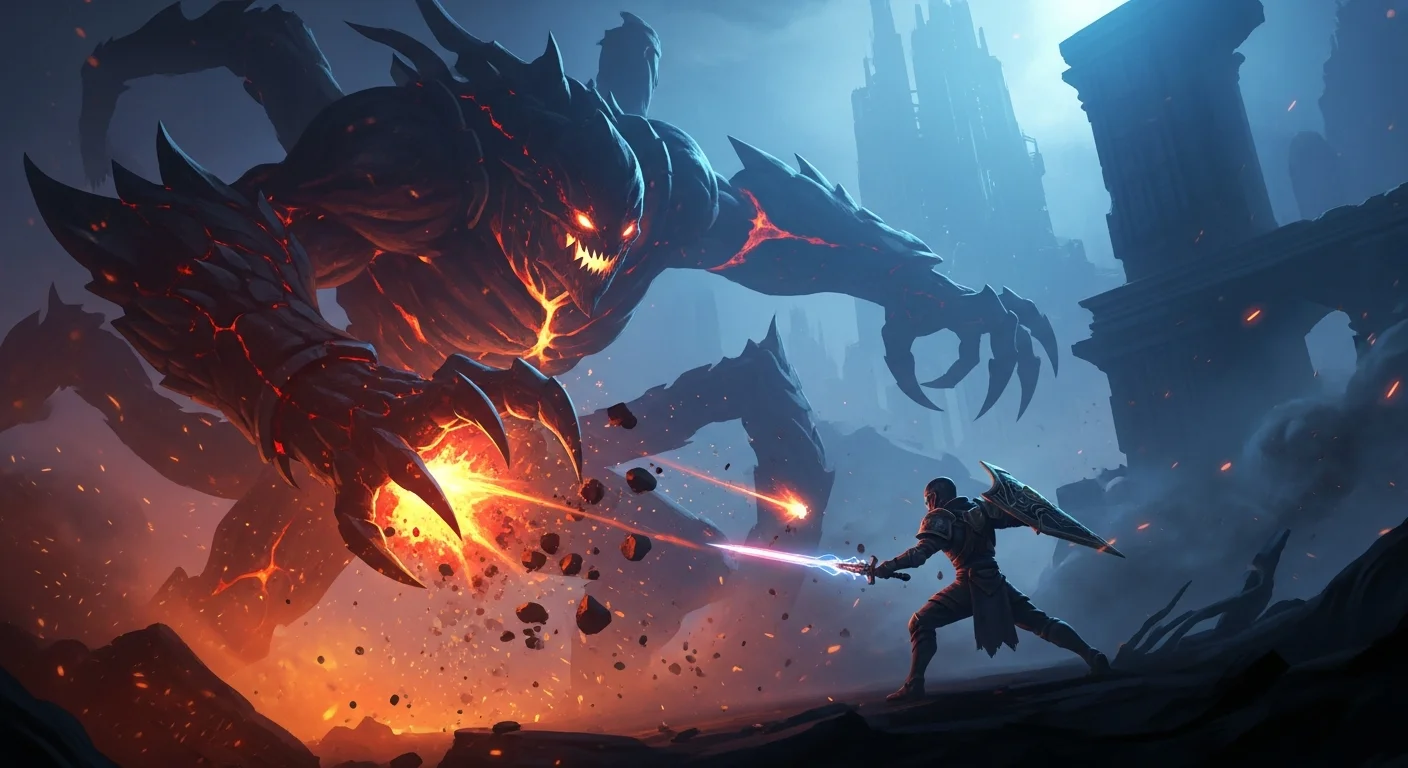
Before the first polygon is rendered or the lighting engine is baked, the soul of a video game is captured in static imagery. The Concept Art Vault is our curated repository of pre-production visuals, offering an analyst’s view into the iterative design process. Here, we dissect the visual language that defines the industry's most immersive worlds.
Environmental Narrative & Atmosphere
Environmental concept art serves as the foundational blueprint for level design and atmospheric storytelling. In this collection, we examine how color scripts and lighting studies dictate the emotional tone of a scene. Notable examples include the stark, brutalist architecture found in dystopian shooters and the organic, fractal-based vegetation distinct to high-fantasy RPGs.
Key Analysis Points:
- Scale and Perspective: How artists use three-point perspective to establish the grandeur of open-world vistas versus the claustrophobia of survival horror corridors.
- Lighting Logic: The transition from "blue hour" sketches to baked global illumination maps, ensuring that light sources guide player navigation subconsciously.
- Texture Density: Early visualizations of surface materials—rust, moss, neon—that inform the shader complexity required in the final engine build.
"The architecture must feel lived-in before it is built."
— Lead Environment Artist, Studio Zenith
From Sketch to Screen
The journey of a digital asset follows a rigorous technical pipeline. We break down the evolution of character models and props, defining the standard industry workflow from initial ideation to the final render pass.
1. Ideation & Orthographic Projection
Every asset begins with a silhouette study. Artists generate rapid thumbnails to establish distinct shapes that are readable from a distance. Once a direction is approved, orthographic views (front, side, and back) are drawn. These technical drawings serve as the precise blueprints for 3D modelers, ensuring proportions remain consistent when moving to three-dimensional space.
2. High-Poly Sculpting & Retopology
Using software like ZBrush, artists create a digital clay sculpture with millions of polygons to capture microscopic details—pores, fabric weave, and surface imperfections. However, this model is too dense for game engines. The process of retopology follows, where a simplified, low-poly mesh is drawn over the high-poly sculpt to ensure optimal performance without sacrificing the silhouette.
"Optimization is an art form. The goal is to maximize visual fidelity while minimizing draw calls."
3. UV Mapping & Texturing
The 3D model is "unwrapped" onto a 2D plane, a process known as UV mapping. Textures are then applied using Physically Based Rendering (PBR) workflows. This involves creating multiple maps: Albedo (base color), Normal (surface detail simulation), Roughness (light scattering), and Metallic. These maps tell the game engine exactly how light should interact with the object's surface.
Read more about Graphics Tech in the Player Handbook →4. Rigging & Integration
For characters, a digital skeleton (rig) is inserted, and "skin weights" are painted to define how the mesh deforms during movement. The asset is finally imported into the engine (e.g., Unreal Engine or Unity), where shaders are compiled, and the asset is placed into the scene hierarchy.
Submission Guidelines
GameSVG maintains a strict editorial standard for our community gallery. To ensure your work is reviewed and potentially featured, please adhere to the following technical and ethical specifications.
Technical Specifications
- • Resolution: Minimum 1920x1080px (1080p). 4K (3840x2160px) is preferred for feature slots.
- • Formats: PNG (lossless) or JPG (maximum quality). WebP is accepted for web optimization.
- • Aspect Ratio: 16:9 Landscape is standard. 1:1 Square accepted for profile features.
Legal & Attribution
- • Originality: Submissions must be original creations. Fan art is permitted but must respect IP holder guidelines.
- • No AI Generation: GameSVG prioritizes human craftsmanship. Purely AI-generated imagery is currently ineligible for the gallery.
- • Rights: You retain full copyright. By submitting, you grant GameSVG a non-exclusive license to display the work.
Curation Standards
- • Composition: We look for strong focal points, balanced negative space, and deliberate color theory application.
- • Context: Works that tell a story or imply a larger narrative universe are prioritized over generic character poses.
- • Process: Including breakdown slides (wireframes, sketches) increases your chance of selection.
For full legal details regarding user-submitted content, please review our Terms of Use.
Artist Spotlights
The GameSVG community is fueled by the dedication of independent creators. In this section, we analyze the portfolios of three emerging talents, breaking down their toolsets, stylistic signatures, and contributions to the broader gaming art ecosystem.
Jaxon "Deft" Doe
Hard Surface Modeler
Jaxon specializes in "kitbashing" complex mechanical structures. His recent series on retro-futuristic vehicles demonstrates an exceptional understanding of functional mechanics—ensuring that every piston and gear looks like it could actually operate.
Capability Checklist
Mira Kovic
Environment Illustrator
Mira's work bridges the gap between traditional oil painting and digital matte painting. She focuses on high-fantasy landscapes, utilizing expansive color gamuts to create ethereal lighting conditions often seen in modern RPG loading screens.